
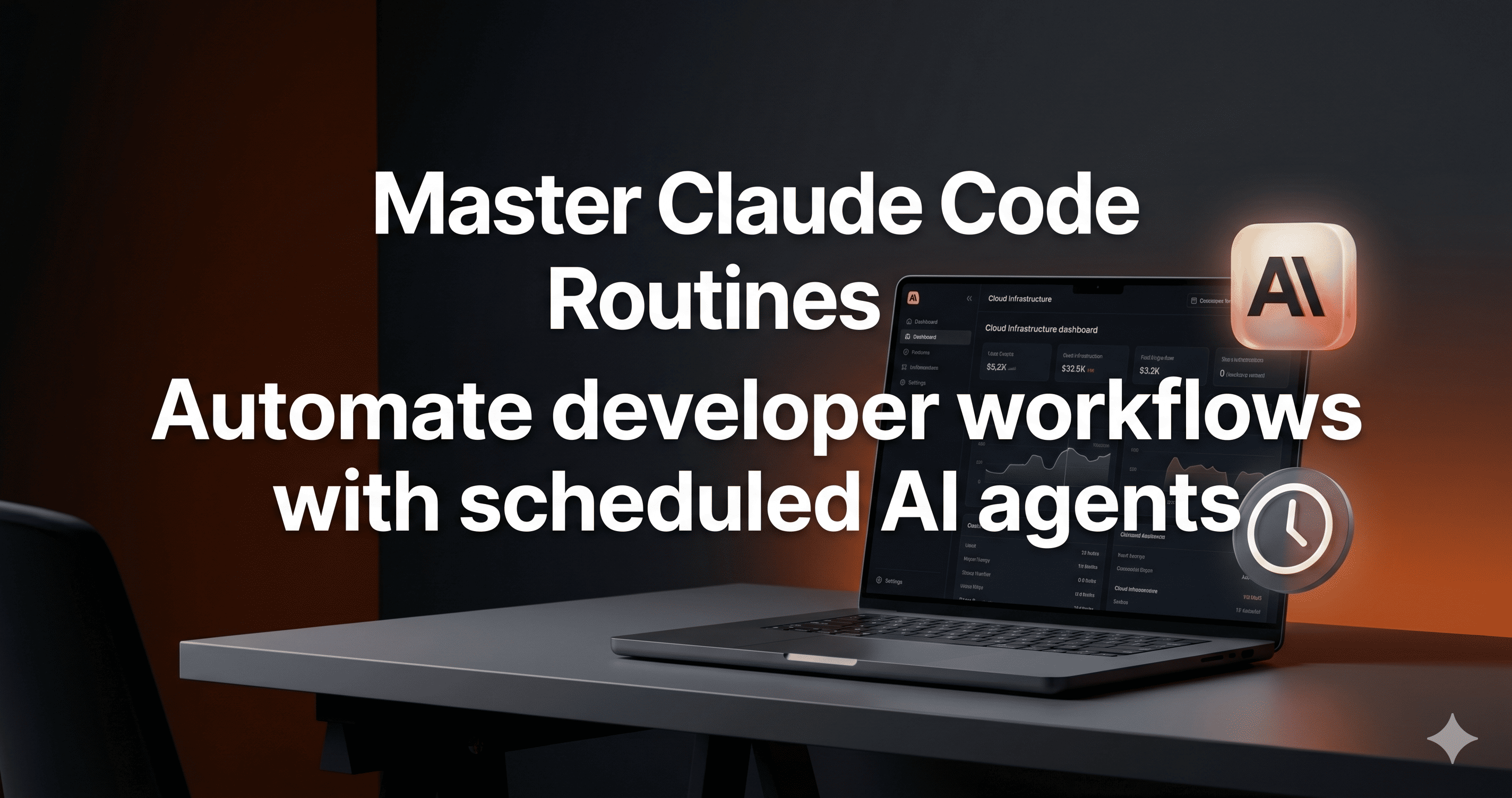
As artificial intelligence continues to reshape the software development lifecycle, the need for autonomous, reliable automation has never been higher. Anthropic recently addressed this by introducing Routines for Claude Code. Released in research preview, this feature allows developers to move beyond manual prompting and local sessions, enabling AI agents to perform complex tasks on a schedule or in response to specific triggers.
What are Claude Code Routines
Claude Code Routines are scheduled or triggered prompts that run entirely on Anthropic's managed web infrastructure. Unlike standard terminal-based AI tools, Routines live in the cloud.
How Claude Code Routines Work
claude.md, to understand project requirements.Requirements and Setup
GitHub Integration
Because Routines run on Anthropic's servers, your project must be hosted in a GitHub repository that Claude has permission to access.
Handling Secrets and API Keys
You should never push sensitive secrets to GitHub. Instead, navigate to your cloud environment settings in the Claude interface to manually add API keys to the Environment Variables section.
Step-by-Step Guide to Creating a Routine
- Define the Prompt: Write a "one-shot" prompt that is extremely specific.
- Set the Trigger: Choose whether to run on a schedule (min 1 hour), API call, or GitHub event.
- Configure Environment Variables: Input your secure API keys.
- Test the Routine: Use the "Run Now" feature to verify the agent's logic.
- Monitor Quotas: Ensure your usage fits within your subscription tier.
Limitations and Quotas
Note: The minimum interval for a scheduled routine is one hour. Routines are stateless and cannot access local cookies or physical hardware files.