
1. LinkedIn Users Mark 1 Million AI 'Slop' Posts
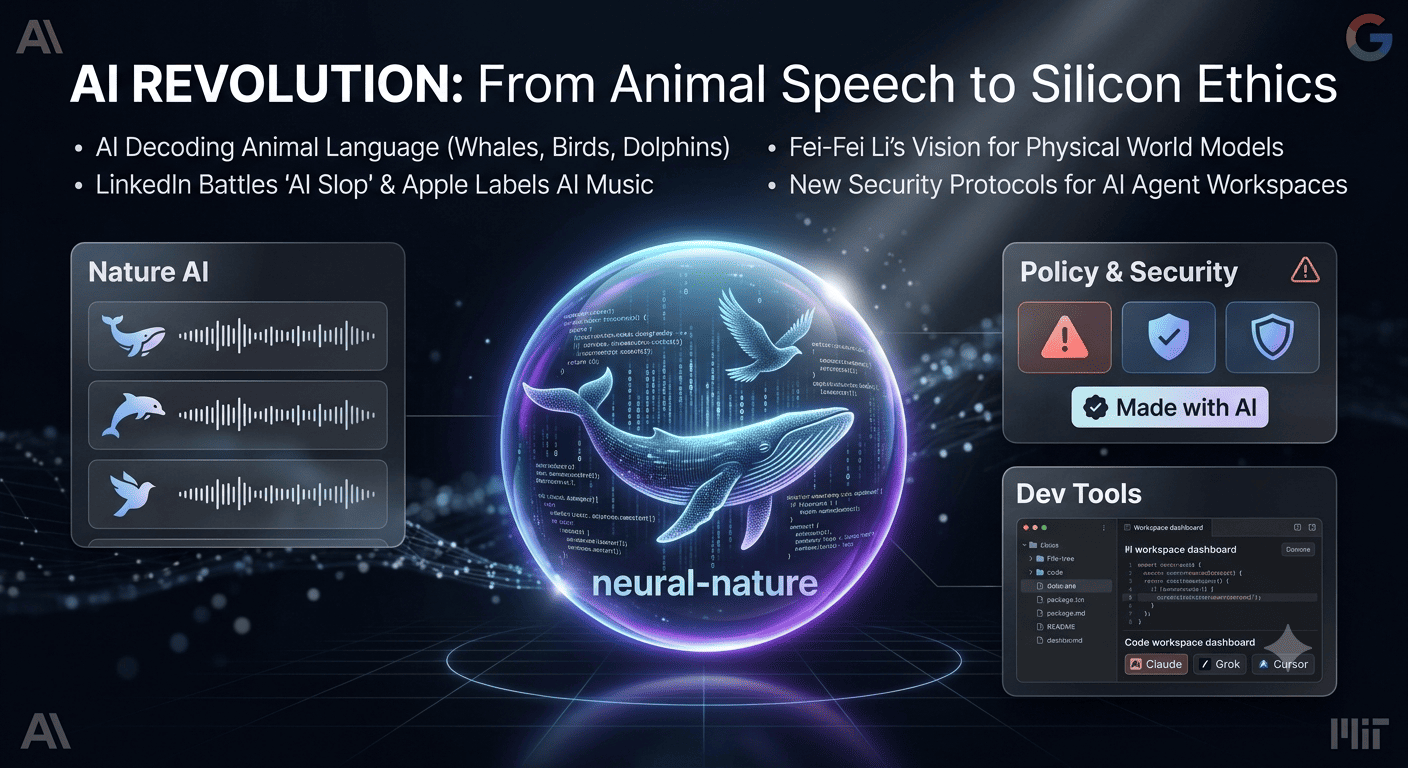
LinkedIn users have actively used the platform's 'slop' reporting feature over one million times to flag low-quality AI-generated content. This initiative has proven effective, resulting in a 40% reduction in views for posts identified as automated or irrelevant spam, helping to maintain a cleaner and more professional feed for the community.
Read full story2. Apple Music Introduces 'Made With AI' Labels for AI-Generated Songs
Apple Music is set to roll out a new 'Made With AI' labelling system for tracks on its platform. This decision follows data revealing that one-third of all new music uploads are now entirely generated by artificial intelligence. The initiative aims to improve transparency for listeners by clearly identifying tracks that have been created without human musical intervention.
Read full story3. Pope Leo XIV Warns Against Global Algorithmic Control
Pope Leo XIV has issued a strong cautionary message regarding the rising dominance of digital algorithms. Addressing the risks of technological reliance, the Pope highlighted how poorer nations face increased vulnerability and dependency on advanced systems controlled by powerful global entities. He urged lawmakers to ensure that technological progress does not compromise human dignity or deepen existing economic inequalities across the world.
Read full story4. Essential Security Tips: Vet AI Agent Skills Before Implementation
Security experts have issued a warning regarding the use of public AI agent skills, revealing that approximately 13% of these available tools contain hidden malware. This video provides a comprehensive walkthrough of five critical safety rules that developers and users must follow when building or integrating agent skills to ensure their systems remain secure and protected from potential cyber threats.
Read full story5. Fei-Fei Li Unveils Her Vision for the Future of Artificial Intelligence
Renowned computer scientist Fei-Fei Li, often referred to as the 'Godmother of AI,' is spearheading a transformative approach to machine learning. Her latest work centers on the development of 'world models'—advanced AI systems designed to observe and predict events in physical, real-world spaces. By shifting the focus beyond text and data towards spatial understanding, Li aims to bridge the gap between digital intelligence and physical reality.
Read full story6. Master Claude AI with Free Official Courses from Anthropic
Anthropic has launched a comprehensive series of free online courses designed to help users gain expertise in their AI ecosystem. The curriculum covers essential topics such as Claude Code, Cowork, Tag, and the AI platform, alongside foundational modules on AI fluency. These resources are aimed at developers and professionals looking to enhance their skills and leverage Claude's capabilities effectively in real-world projects.
Read full story7. Artificial Intelligence Decodes Complex Animal Communication
Advanced AI models are successfully decoding intricate animal communication patterns. Researchers have discovered that African elephants use individualised, name-like calls to address one another, while marmosets utilise specific vocal labels to identify objects and peers. This breakthrough highlights the sophisticated social structures and communication abilities present in the animal kingdom.
Read full story8. Marmosets Use Unique Vocal Labels to Identify Family Members
Recent scientific research reveals that marmosets communicate using distinct vocal labels to identify individual members within their social groups. These primates share specific call patterns that function similarly to regional accents, helping strengthen bonds and facilitate recognition within their family units. This discovery highlights the complex social intelligence and sophisticated vocal communication methods employed by these small monkeys in their natural habitats.
Read full story9. MIT Researchers Decode Complex Patterns in Sperm Whale Communication
Researchers at MIT have discovered 143 distinct repeating patterns within the clicks produced by sperm whales. By applying advanced data analysis, the team identified these acoustic structures, which suggest that these marine mammals may possess a sophisticated form of communication or language. This study marks a significant step forward in understanding the social complexity and vocal behavior of whales in their natural habitats.
Read full story10. Scientists Discover Secret Communication Methods Used by Crows
Researchers have uncovered the hidden communication patterns of carrion crows by using advanced, miniature microphones. The study reveals that these birds use specific, low-volume calls to signal their arrival at nests, a behavior that was previously difficult to detect. This breakthrough provides new insights into how crows maintain social coordination and interact within their environments using subtle vocal cues.
Read full story11. AI Successfully Communicates with Birds in Real-Time
Researchers have developed an advanced AI model capable of engaging in live, interactive exchanges with zebra finches. By training the system on the specific vocal patterns and calls of these birds, the AI can now effectively respond to and participate in communication with real birds. This breakthrough represents a significant advancement in understanding avian social behaviour and animal-machine interaction.
Read full story12. Google Unveils DolphinGemma AI to Decode Dolphin Communication
Google has introduced DolphinGemma, an advanced AI model designed to analyse and predict complex dolphin vocalizations. By studying the unique acoustic patterns of these marine mammals, the technology aims to map specific whistles to objects and environmental triggers, potentially bridging the communication gap between humans and dolphins. This research marks a significant milestone in using machine learning to understand non-human languages.
Read full story13. Proliferate Integrates Multiple AI Coding Assistants into One Unified Workspace
Proliferate offers developers a streamlined solution to manage their coding workflow by running popular AI models, including Claude Code, Codex, Cursor, and Grok, simultaneously within a single workspace. This integration allows users to leverage the unique capabilities of multiple AI coding assistants in one environment, enhancing productivity and simplifying complex programming tasks.
Read full story14. Semantica Simplifies Data Mapping with Knowledge Graph Technology
Semantica introduces an innovative approach to data management by mapping complex information into a comprehensive knowledge graph. This tool is designed to enhance operational clarity by meticulously tracking automated decision-making processes. By providing a transparent audit trail of how decisions are reached, Semantica helps organisations build trust and maintain better oversight of their data-driven systems.
Read full story15. OpenViking Organises AI Agent Memory into Easy-to-Navigate File Trees
OpenViking offers a new way to manage AI agent interactions by converting complex memory logs into a structured, browsable file tree format. This innovative tool allows developers and users to easily explore, review, and replay historical agent context, making the debugging and analysis of AI workflows significantly more intuitive and efficient.
Read full story