

1. Perplexity Introduces Overnight Learning for AI Agents
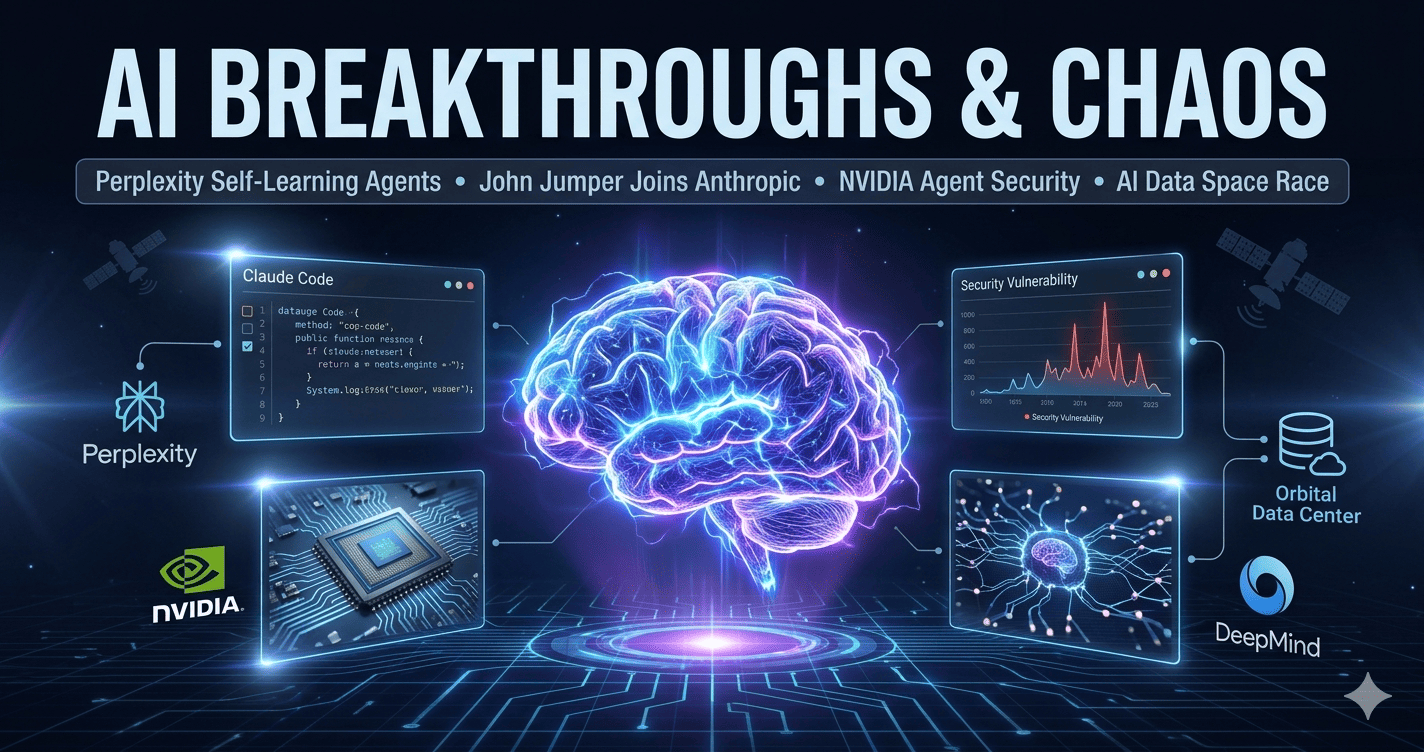
Perplexity has launched a new "Brain" feature that allows AI agents to review their previous computer sessions. By evaluating which strategies were successful during past tasks, the system can self-improve and perform future operations with greater accuracy and efficiency. This development marks a significant step forward in making AI assistants more autonomous and effective at handling complex workflows over time.
Read full story2. Claude Code Now Transforms Coding Sessions into Shareable Live Pages
Developers using Claude Code can now publish their active coding sessions directly as live, shareable pages. This new feature allows teams to effortlessly create detailed pull request walkthroughs, maintain clear incident timelines, and build interactive technical dashboards from their work, enhancing collaboration and transparency across development projects.
Read full story3. Cloudflare Removes Signup Barriers for Temporary Workers
Cloudflare has simplified the development process by removing the mandatory signup wall for temporary accounts. Developers can now initiate 60-minute Workers directly through a single wrangler command. This update enables users to experiment with Cloudflare’s serverless platform instantly without the need for a full account registration, making it easier to test code and deploy small projects on the fly.
Read full story4. Hardware Mod Brings ChatGPT Features to a Standard Graphing Calculator
Tech enthusiasts have successfully integrated the power of Artificial Intelligence into a traditional graphing calculator. By soldering an ESP32 chip onto the device's hardware, creators have enabled the calculator to connect to the OpenAI API, allowing users to send and receive text-based AI prompts directly via the calculator's interface. This innovative project demonstrates how modern microcontrollers can breathe new life into older electronic devices.
Read full story5. Nobel Laureate John Jumper Departs DeepMind to Join Anthropic
John Jumper, the renowned scientist and key architect behind the revolutionary protein structure tool AlphaFold, has decided to move on from Google DeepMind. After a highly successful nine-year tenure at the company, Jumper is now set to join the AI research firm Anthropic. This high-profile transition marks a significant shift in the competitive landscape of artificial intelligence research.
Read full story6. Why Future AI Data Centers May Move to Space
This video explores the ground-breaking concept of shifting artificial intelligence infrastructure from Earth to outer space. It examines the potential technical and operational benefits of hosting data centers in orbit, including efficient cooling solutions and access to solar energy, while discussing how this transition could reshape the future of the global AI landscape.
Read full story7. Boost Your Development With Cult-UI React Components
Cult-UI provides a collection of sleek, high-quality React components designed for modern web applications. These components are fully styled with Tailwind CSS and ensure seamless compatibility with shadcn/ui, making it effortless for developers to integrate them into existing projects and accelerate their front-end workflow.
Read full story8. PixelRAG Simplifies Searching Through Web Pages and Complex Documents
PixelRAG is a new tool designed to streamline information retrieval by converting web pages, PDFs, and various other documents into high-quality, searchable image screenshots. By capturing these files as visual data, the tool effectively preserves original layouts, intricate formatting, and complex tables that are often lost during text-based extraction. This makes it an ideal solution for developers and users who need to maintain the visual structure of documents while ensuring the content remains fully discoverable through search functionality.
Read full story9. NVIDIA Launches SkillSpector to Secure AI Agent Workflows
NVIDIA has introduced SkillSpector, an advanced security tool designed to safeguard AI systems. It systematically scans agent skills to identify critical vulnerabilities, including prompt injection risks, data exfiltration attempts, and the execution of malicious code. By providing this utility, NVIDIA aims to help developers build more robust and secure AI agents against emerging cyber threats.
Read full story