
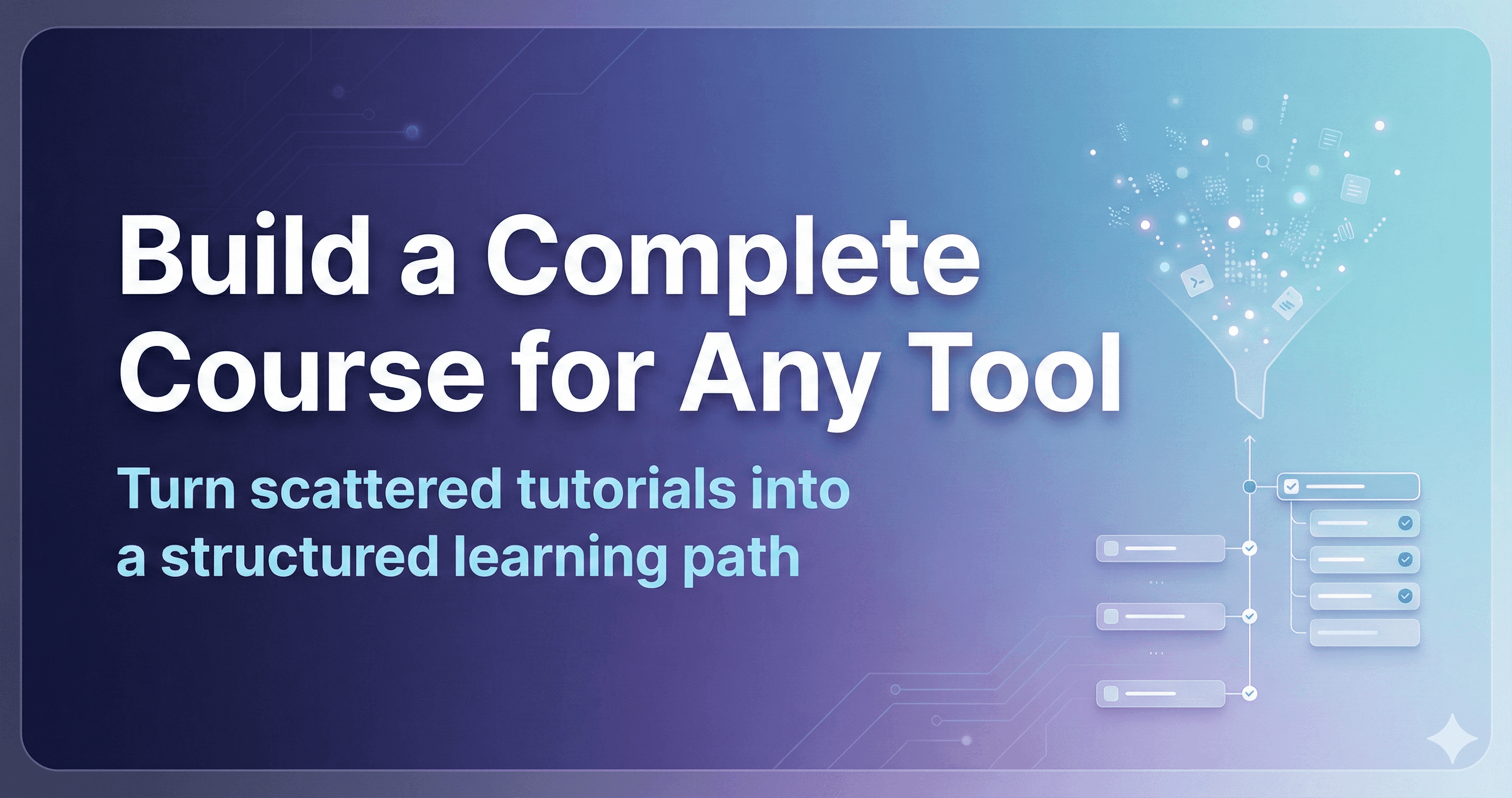
Most people waste weeks jumping between random tutorials, outdated guides, and incomplete documentation when learning a tool for the first time. This tutorial shows a quicker, smarter way to build a complete course for any tool in a short amount of time.
Define Learning Objective
Start by deciding exactly what you want to achieve with the tool.
Be specific about your outcome so your research stays focused and efficient.
Let Gemini Do Research
Ask Gemini to perform a deep search for the best educational YouTube content about the tool.
Use a prompt like:
“Find the most practical and beginner-friendly YouTube tutorials, walkthroughs, and full courses about [Tool Name]. Focus on real-world usage and current versions.”
Collect Knowledge Base
Go to the company’s website and save all official learning material:
- Documentation
- Tutorials and guides
- API references (if applicable)
- Product blogs and updates
Extract Real-World User Knowledge
Search relevant subreddits, forums, and communities related to the tool.
Look for experienced users sharing workflows, advanced setups, and practical use cases that go beyond basic tutorials.
Build Knowledge Hub
Upload all collected material into NotebookLM so everything lives in one place.
You will then have a searchable, organized knowledge base built from the best resources on the internet.
Generate Full Course Curriculum
Ask NotebookLM to build a complete learning path from beginner to expert:
- Step-by-step lessons
- Real-world projects
- Practical workflows
- Hands-on exercises
This turns scattered information into a structured course.
Learn Through Personalized System
You should have a complete curriculum built specifically for you.
It follows real workflows, includes practical projects, and reflects best practices from power users — not generic theory.
Note: Don’t try to consume everything at once. Let the curriculum guide your learning path and follow it step by step.