
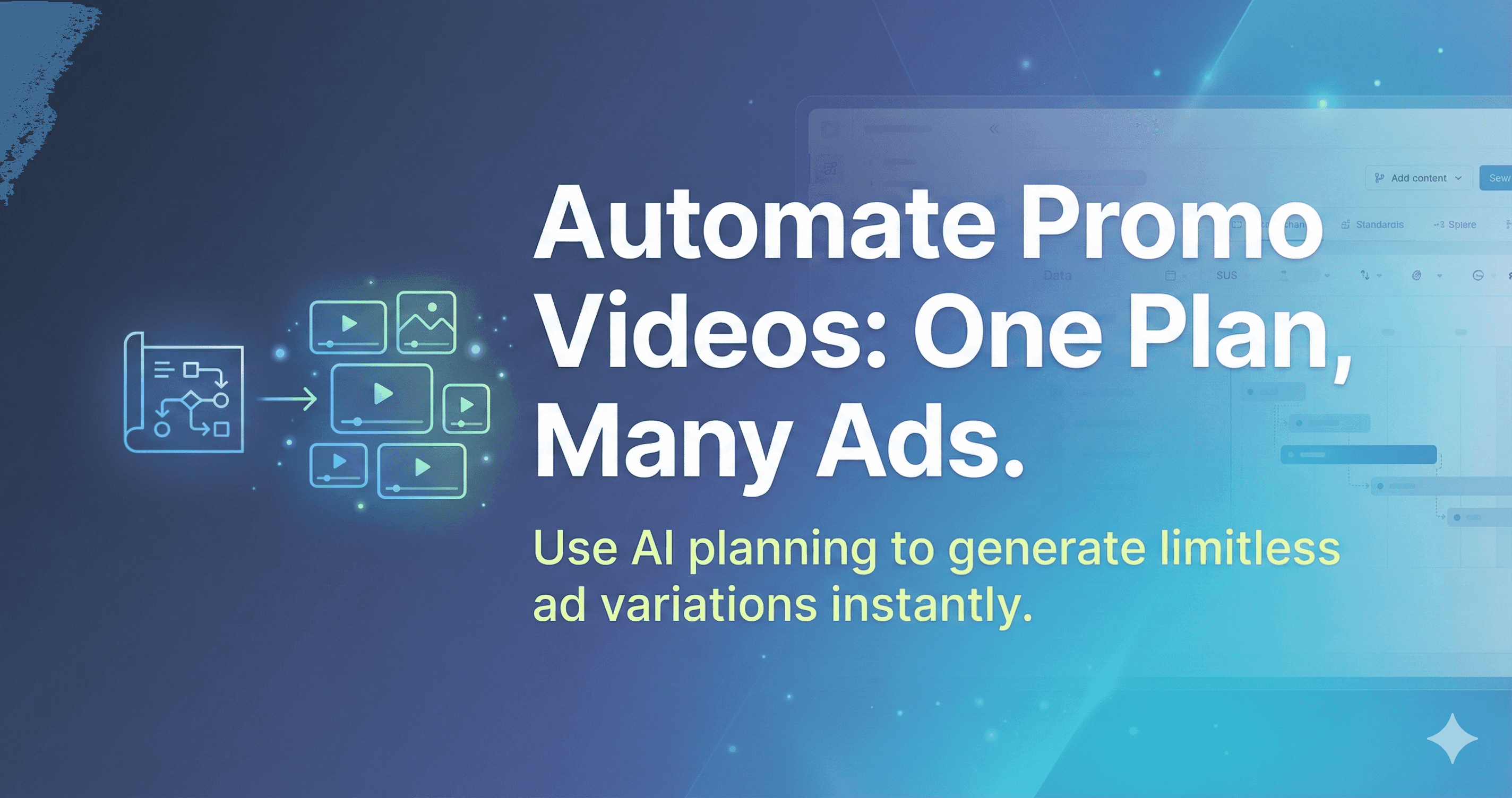
Creating ads often means repeating the same edits. This guide shows a more efficient way: plan videos in NotebookLM, turn them into Remotion components, and generate many ad variations from one setup.
Add brand sources
Upload a few key assets so it understands your product.
- Product screenshots, landing page images, logo
- A short brand note: audience, promise, tone
Use interview mode
Ask NotebookLM to interview you, then create concepts.
Prompt example:Interview me with 10 quick questions about my product, audience, offer, and tone. After I answer, generate 5 promo video concepts with: hook, 3 beats, on-screen text ideas, and a 20 to 30 second structure.Convert each concept
Turn each concept into an implementation-ready plan.
Prompt example:Write a PRD for this concept to build in Remotion. Include: length, aspect ratio, scene list with timestamps, exact on-screen text per scene, transitions, animation notes, and required assets.Create Remotion project
Set up the project and start the editor.
- npx create-video@latest
- npm install
- npm run dev
Drop PRD into project
Initialize Git, then add the PRD markdown to the project root (ex: prd-concept-1.md).
Use Codex to build video
Have Codex read the PRD and generate the Remotion components.
Prompt example:Read prd-concept-1.md in the project root. Implement the video in Remotion exactly as written. Create reusable scene components so I can swap text and images later. List the files you changed.Preview and export
Preview at http://localhost:3000 then export using the rocket icon in the Remotion editor.
Note: Keep the copy, timing, and scene order in the PRD. If something is missing, it will lead to confusion in the code.